

 |
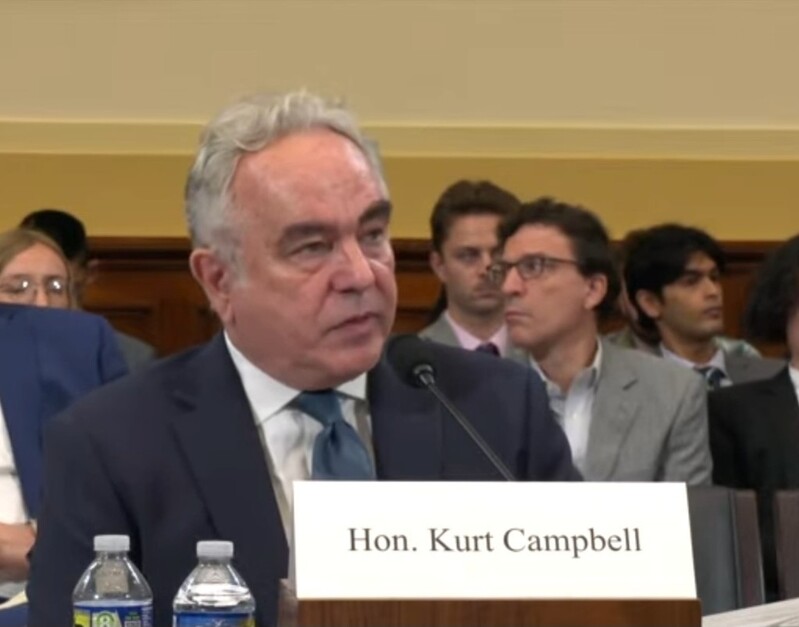
| ▲ U.S. Deputy Secretary of State Kurt Campbell speaks during a hearing of the House Foreign Affairs Committee on Sept. 18, 2024 in this photo captured from a YouTube account of the committee. (PHOTO NOT FOR SALE) (Yonhap) |
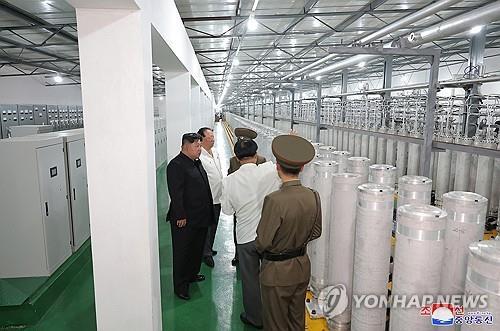 |
| ▲ North Korean leader Kim Jong-un (in black suit) inspects the Nuclear Weapons Institute and the production base of weapons-grade nuclear materials, in this image provided by the North's official Korean Central News Agency on Sept. 13, 2024. (For Use Only in the Republic of Korea. No Redistribution) (Yonhap) |
Campbell-N Korea
U.S. will not accept N. Korea as nuclear state: Campbell
By Song Sang-ho
WASHINGTON, Sept. 18 (Yonhap) -- The United States will not accept North Korea as a nuclear-armed country, a senior U.S. diplomat said Wednesday, after Pyongyang made a rare disclosure of a uranium enrichment facility last week.
During a hearing of the House Foreign Affairs Committee, Deputy Secretary of State Kurt Campbell reiterated the U.S. position, stressing that North Korean leader Kim Jong-un is taking "deeply malign" steps against the interests of the U.S. and its allies, South Korea and Japan.
On Friday last week, the North's state media reported that Kim had visited a uranium enrichment facility, in the first disclosure of such a site since the regime invited Siegfried Hecker, a U.S. nuclear scientist, to its uranium enrichment facility at Yongbyon, north of Pyongyang, in 2010.
"I will just say diplomatically, we're prepared to sit down and engage with North Koreans," Campbell said. "We do have some conditions. We will not accept North Korea as a nuclear state."
Asked if the North Korean leader has a malign influence on U.S. interests in the Indo-Pacific, Campbell agreed.
"I would say clearly, Kim Jong-un is undertaking deeply malign steps against American strategic interests, against our closest partners in Japan and South Korea," he said. "I do not believe there are any redeeming features about their role on the global stage."
Regarding a question over whether Washington will enter negotiations only after the North's abandonment of its nuclear program, Campbell underscored Pyongyang's unwillingness to talk.
"I will tell you all of our engagements are attempts. We wanted to help, to assist during COVID. We wanted to open the door," he said. "For the last six years, we've had virtually no communication with North Korea. They have chosen not to engage with us directly."
The hearing came as Pyongyang has ratcheted up tensions with a set of weapons tests, a disclosure of a nuclear facility and continued tough rhetoric, with the U.S. presidential election less than seven weeks away.
The North's saber-rattling has added to concerns that the recalcitrant regime could engage in major provocations near the U.S. general election to bolster its leverage.
(END)
(C) Yonhap News Agency. All Rights Reserved