(LEAD) S Korea-US-Japan talks
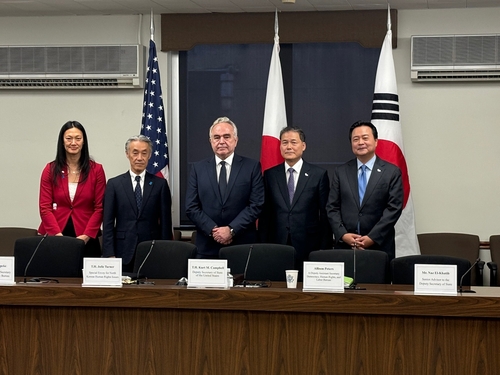 |
| ▲ Senior officials from South Korea, the United States and Japan pose for a photo as they gather at the first trilateral meeting on North Korean human rights in Washington on Oct. 18, 2024. (Pool photo) (Yonhap) |
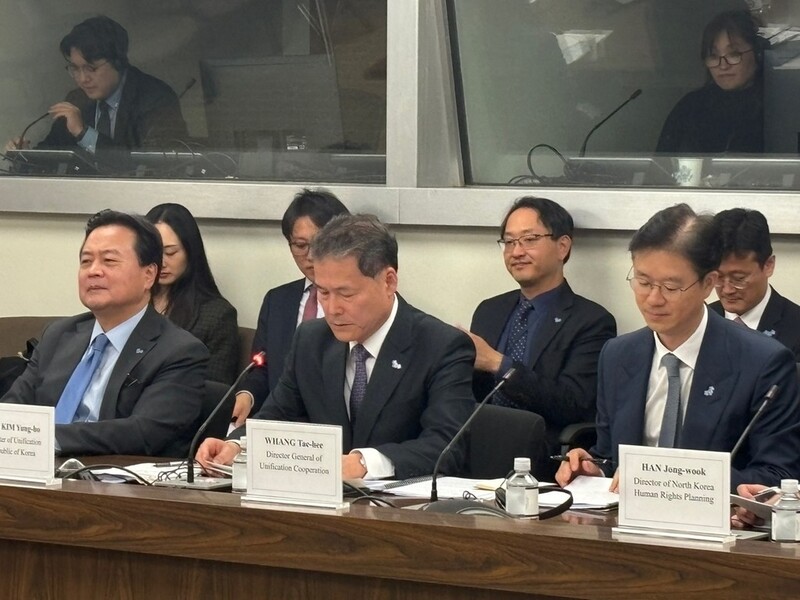 |
| ▲ South Korea's Unification Minister Kim Yung-ho (C) speaks during the South Korea-U.S.-Japan meeting on human rights in North Korea in Washington on Oct. 18, 2024. (Pool photo) (Yonhap) |
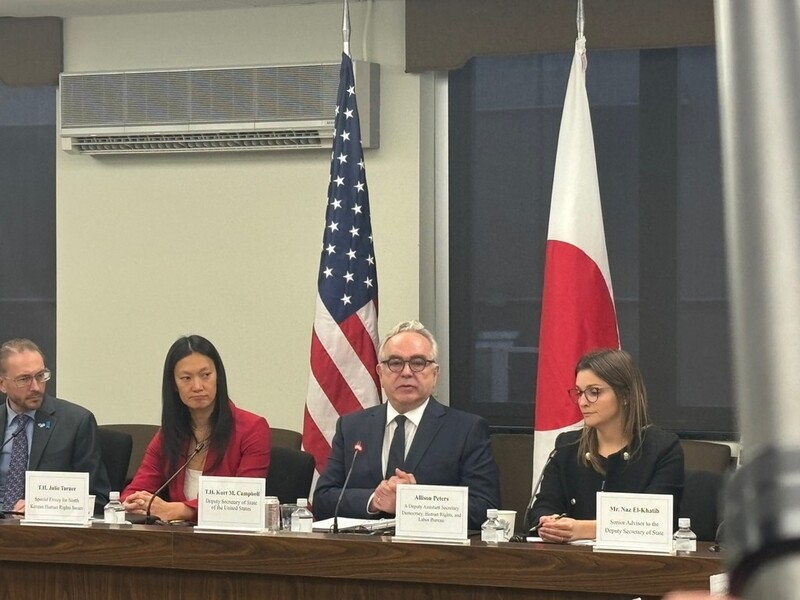 |
| ▲ U.S. Deputy Secretary of State Kurt Campbell (2nd from R) speaks during the South Korea-U.S.-Japan meeting on human rights in North Korea in Washington on Oct. 18, 2024. (Pool photo) (Yonhap) |
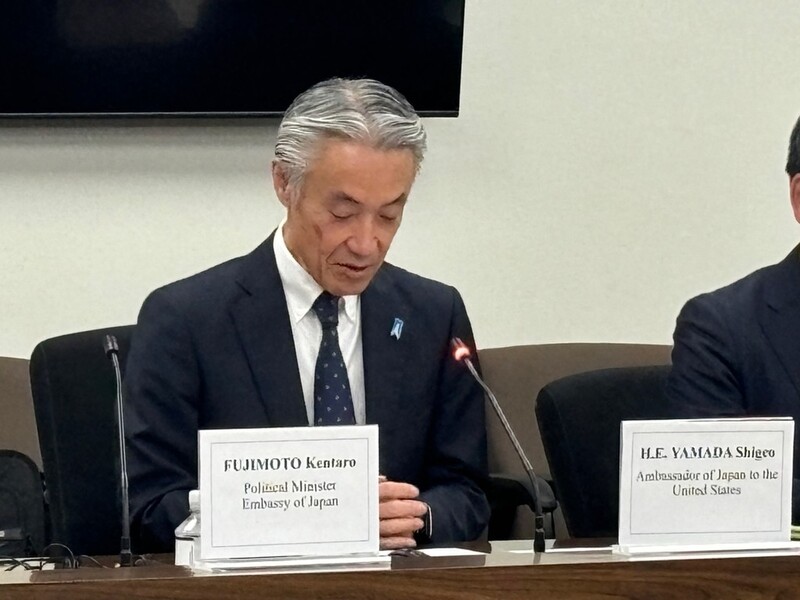 |
| ▲ Japanese Ambassador to the U.S. Shigeo Yamada speaks during the South Korea-U.S.-Japan meeting on human rights in North Korea in Washington on Oct. 18, 2024. (Pool photo) (Yonhap) |
(LEAD) S Korea-US-Japan talks
(LEAD) S. Korea, U.S, Japan stress unity in improving N.K. human rights, decry Pyongyang as 'worst' violator
(ATTN: ADDS photos, more remarks in paras 14-23)
By Song Sang-ho
WASHINGTON, Oct. 18 (Yonhap) -- South Korea, the United States and Japan highlighted their shared commitment to tackling human rights challenges in North Korea on Friday, stressing that addressing them is "integral" to promoting lasting peace on the Korean Peninsula.
The three countries issued a joint statement after they held the first trilateral meeting on North Korean human rights in Washington amid concerns that a repressive political climate in the North allows Pyongyang to continue to advance its weapons programs without open dissent.
"They reaffirmed that improving the human rights situation in North Korea is integral to achieving lasting peace on the Korean Peninsula," the three countries said in the joint statement.
The countries pointed out that the North Korean regime remains "one of the worst human rights violators in the world, committing violations and abuses within its own territory and abroad," while calling for international efforts to enhance human rights in the reclusive state.
"There are regular, credible reports of acts involving summary executions, assassinations, abductions -- including of Japan, ROK, and other foreign nationals --, torture, and unlawful and unjust detentions," they said, referring to South Korea by its official name, the Republic of Korea.
"Today, as the human rights situation in North Korea continues to deteriorate, the Governments of the United States, the ROK, and Japan urge the international community to shift its approach on North Korean human rights issues toward action -- from monitoring violations and abuses to promoting accountability."
The countries said that they intend to bolster joint efforts to increase access to independent information in the North, promote accountability for those responsible for abuses, and support and amplify the voices of North Korean escapees and refugees.
They also underlined their commitment to urge the immediate resolution of the issues of abductees, detainees, and others unjustly detained, and unrepatriated prisoners of war as well as the issue of separated families.
The three sides also concurred to promote the efforts to counter what they called the widespread and pervasive risks posed by North Korea's use of forced labor, which operates domestically and internationally, according to the statement.
The U.S. and Japan acknowledged their support for President Yoon Suk Yeol's vision of a "free, peaceful and prosperous" Korean Peninsula and reiterated their backing for a "unified Korean Peninsula that is at free and at peace," the statement read.
"In the Spirit of Camp David, the three governments are aligned in our vision, undaunted in the face of our era's greatest challenges, and united in our commitment to tackle human rights challenges in North Korea together, now, and in the future," the countries said.
Camp David refers to the landmark three-way summit that Yoon, U.S. President Joe Biden and then Japanese Prime Minister Fumio Kishida held at Camp David in Maryland in August last year.
The first standalone trilateral summit produced a series of agreements, including the "Commitment to Consult" each other in the event of a shared threat.
Friday's meeting was attended by senior government officials, including South Korea's Unification Minister Kim Yung-ho, South Korean Ambassador to the U.S. Cho Hyun-dong, U.S. Deputy Secretary of State Kurt Campbell, U.S. Special Envoy for North Korean human rights Julie Turner and Japanese Ambassador to the U.S. Shigeo Yamada.
In his opening remarks, Kim pointed out that with Pyongyang shutting off all avenues of communication, North Korea remains a "devil's triangle of human rights abuses."
"If we turn a blind eye to these issues, the perpetrators will become more brazen and the human rights situation for the North Korean people will further deteriorate," he said.
"We must continue to ensure accountability, sending a strong warning that no act of human rights abuse will be tolerated and that there will be no safe haven anywhere in the world for the perpetrators," the South Korean minister added.
Campbell underlined the importance of cooperation between Seoul, Washington and Tokyo.
"I want to underscore directly that it is only through closest possible coordination between the United States, the ROK and Japan are we going to be able to deal with not only the strategic challenges that North Korea provides and the worries that engagements of the DPRK and Russia and elsewhere that we are closely following, but also the enduring issue of the human rights challenge," Campbell said.
"We believe that the issues that the people of the DPRK are facing are becoming more severe, more urgent and more concerning," he added. DPRK stands for the North's official name, the Democratic People's Republic of Korea.
Yamada called the continued human rights violations in the North "deplorable."
"North Korea continues to invest in nuclear and missile development programs at the expense of the basic welfare of its people," he said.
The trilateral meeting was followed by a session focusing on discussions involving North Korean defectors, human rights experts and government officials.
(END)
(C) Yonhap News Agency. All Rights Reserved