

 |
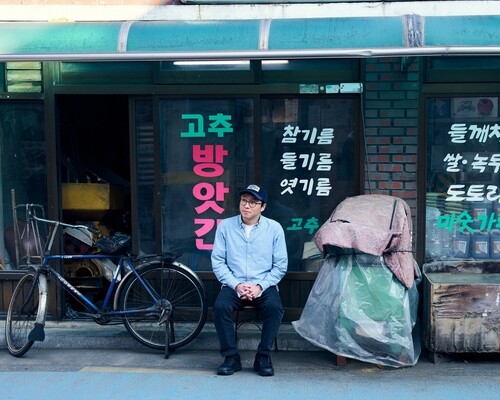
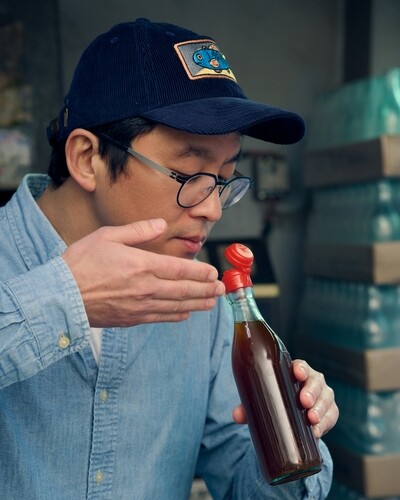
| ▲ This photo provided by Netflix shows chef Choi Kang-rok, who claimed the final victory on Netflix’s hit variety show "Culinary Class War 2." (PHOTO NOT FOR SALE) (Yonhap) |
SEOUL, Jan. 16 (Yonhap) — “I’m glad I gave it another shot.”
Chef Choi Kang-rok, who claimed the final victory on Netflix’s hit variety show "Culinary Class War 2," smiled as he said it was the right decision to return despite the heavy pressure.
Speaking in an interview at a cafe in Seoul’s Jongno district on Friday, Choi said, “Season 1 was so popular that I worried, ‘What if the sequel can’t live up to it?’ I was also concerned that I might get eliminated too early. But in the end, things turned out well, and I feel good about it.”
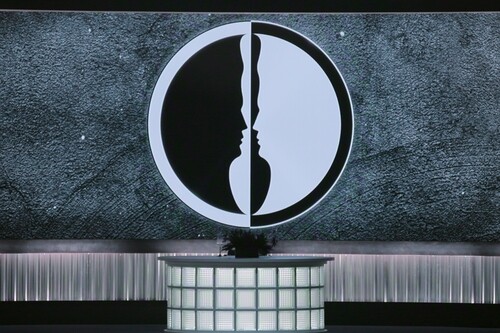
After being eliminated once in season 1, Choi returned in season 2 as a so-called “hidden Black Spoon” contestant.
He said his decision to rejoin the show was prompted by a single email from Kim Hak-min, the producer in charge of the "Culinary Class War" series.
Kim, who joined Choi for the interview, said, “In season 1, I asked Chef Choi to become a ‘firestarter’ for the food industry. This time, I sent him a long email saying, ‘Didn’t you burn incompletely in season 1? Come back and burn completely.’”
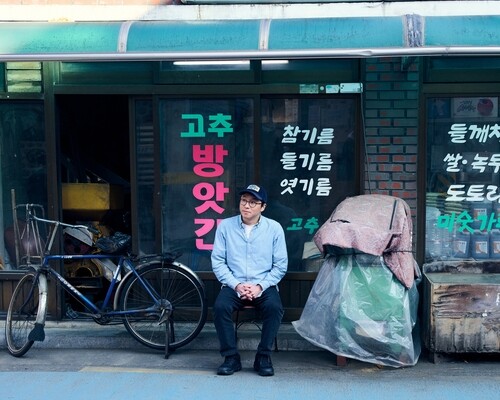 |
| ▲ This photo provided by Netflix shows chef Choi Kang-rok, who claimed the final victory on Netflix’s hit variety show "Culinary Class War 2." (PHOTO NOT FOR SALE) (Yonhap) |
Choi said the phrase “burn completely” struck a chord with him.
“If being a firestarter was about igniting the flame, this time I came back determined to burn it all the way through,” he said.
Choi’s journey to victory in season 2, which began as a comeback challenge, unfolded like a drama.
In the first round of the semifinals, titled “Infinite Cooking Heaven,” where two finalists were selected from the top seven, Choi lived up to his nickname “the braising man” by presenting "Mujisushi" (steamed sushi), a dish that encapsulated his lifelong dedication to braising.
Despite a rule allowing unlimited dishes to be served over 180 minutes, he focused on just one menu item. His meticulous technique of braising each ingredient separately drew rave reviews from the judges and secured him a spot in the top two.
“When I heard the mission was ‘Infinite Cooking Heaven,’ I had a feeling ‘hell’ would come next,” Choi said. “Watching the ‘Tofu Hell’ challenge in season 1 made me think, ‘Wow, I should have tried that.’ So I decided that even if I fell from heaven, I could survive hell by sticking to one dish.”
The second round, “Infinite Cooking Hell,” in which six contestants competed for one remaining spot, resembled a brutal survival game.
In particular, the face-off between 57-year veteran Chinese chef Hu Deok-juk and Black Spoon contestant Lee Ha-seong, nicknamed the “cooking monster,” heightened tension by portraying a fierce clash between generations in the culinary world.
In a carrot-themed challenge, Hu showcased his mastery with inventive Chinese dishes such as carrot jajangmyeon and spicy carrot stir-fry, but was eliminated after an exhausting endurance battle that lasted until the final moments.
Lee advanced instead, captivating the judges with creative dishes that deconstructed the carrot as the main ingredient, including carrot soy milk custard and smoked carrot tartare.
The theme of the final showdown between Choi and Lee was “cooking for myself.” Lee presented a blood sausage soup inspired by memories of his father, while Choi served a soup dish featuring sesame tofu.
Sesame tofu, which requires stirring liquid in a pot hundreds or thousands of times until it solidifies, reflected Choi’s resolve not to grow complacent.
“It was a form of self-check,” he said. “As I got older, I noticed myself avoiding dishes that require physically demanding work. I chose sesame tofu to prove to myself that I can still do more.”
Though long branded with nicknames like “the braising man,” “braising king” and “serial braiser,” Choi surprised viewers by choosing a soup dish rather than a braised one in the final.
On the show, he candidly said, “I am the ‘braising man.’ I’ve lived my life pretending to be good at braising because of that nickname. But I didn’t want to braise even in a dish meant just for myself.”
Letting go of his label and focusing solely on sincerity, Choi’s dish moved the judges, and he ultimately claimed a unanimous victory.
It marked his first cooking competition title in 13 years, since winning "MasterChef Korea 2" in 2013.
While restaurants run by other contestants have been flooded with reservations since the release of "Culinary Class War 2," the irony is that the winner himself currently operates no restaurant.
Choi made it clear that he has no plans to open one anytime soon.
“Right after winning, I thought, ‘I can’t open a restaurant for a while,’” he said. “People come with huge expectations, and when expectations get too high, there’s no way to fully meet them.”
Still, he stressed that he has no intention of stepping away from food altogether.
“There are still plenty of food-related things I’m working on,” he said. “Someday, when I have more leeway, I’d like to grow old running a small noodle shop. I love noodles, and when I think about cooking I can keep doing even in old age, noodles come to mind. It should be a place where I can close the doors and rest whenever my body needs it.”
Despite its popularity, "Culinary Class War 2" was not without controversy.
Given Choi’s dramatic path to victory, some viewers raised suspicions that he had been predetermined as the winner from the start.
Kim dismissed the claims, saying, “There is absolutely no such thing as a predetermined winner.” Choi echoed the sentiment, saying, “If I had been offered that, I wouldn’t have even started. I wouldn’t have felt right about it and probably wouldn’t have been able to sleep.”
Spoiler controversies also surrounded the show before and after its release.
Co-director Kim Eun-ji acknowledged that the spoiler revealing the finalists, which stemmed from the exposure of Lee’s name tag, was “entirely the production team’s mistake.” Regarding online leaks of Choi’s victory before the show aired, she said an investigation into the source of the initial leak is underway.
Choi said he was startled when he heard about the spoiler, adding with a laugh, “I thought I should hide myself even more, but I didn’t expect the release would still be six months away. The penalty fees were so steep that I didn’t even tell my spouse.”
The producers also expressed regret over Lee being labeled the season’s “villain” after using a commercial mixed seasoning called “Brown Veal Stock” during a revival round and making certain remarks in interviews.
Kim said, “The common rule was that only commercially available products could be used, and Brown Veal Stock is one of them. Gochujang and soy sauce are also mixtures, so it would be strange to ban one and allow the others.”
He added, “We thought Lee expressed confidence in his own cooking while still showing respect to others in interviews, so it’s puzzling that he felt the need to apologize.”
The production team has begun recruiting contestants for season 3, which will introduce a new concept focusing on competition between restaurants rather than individual chefs.
“We tried to address the regrets of season 1 in season 2, and thankfully the results exceeded expectations,” Kim said. “With season 3, we want to tell an even broader story.”
(C) Yonhap News Agency. All Rights Reserved





![[가요소식] 코르티스, 애플과 협업으로 몰입형 영상 공개](/news/data/20260116/yna1065624915984223_966_h2.jpg)